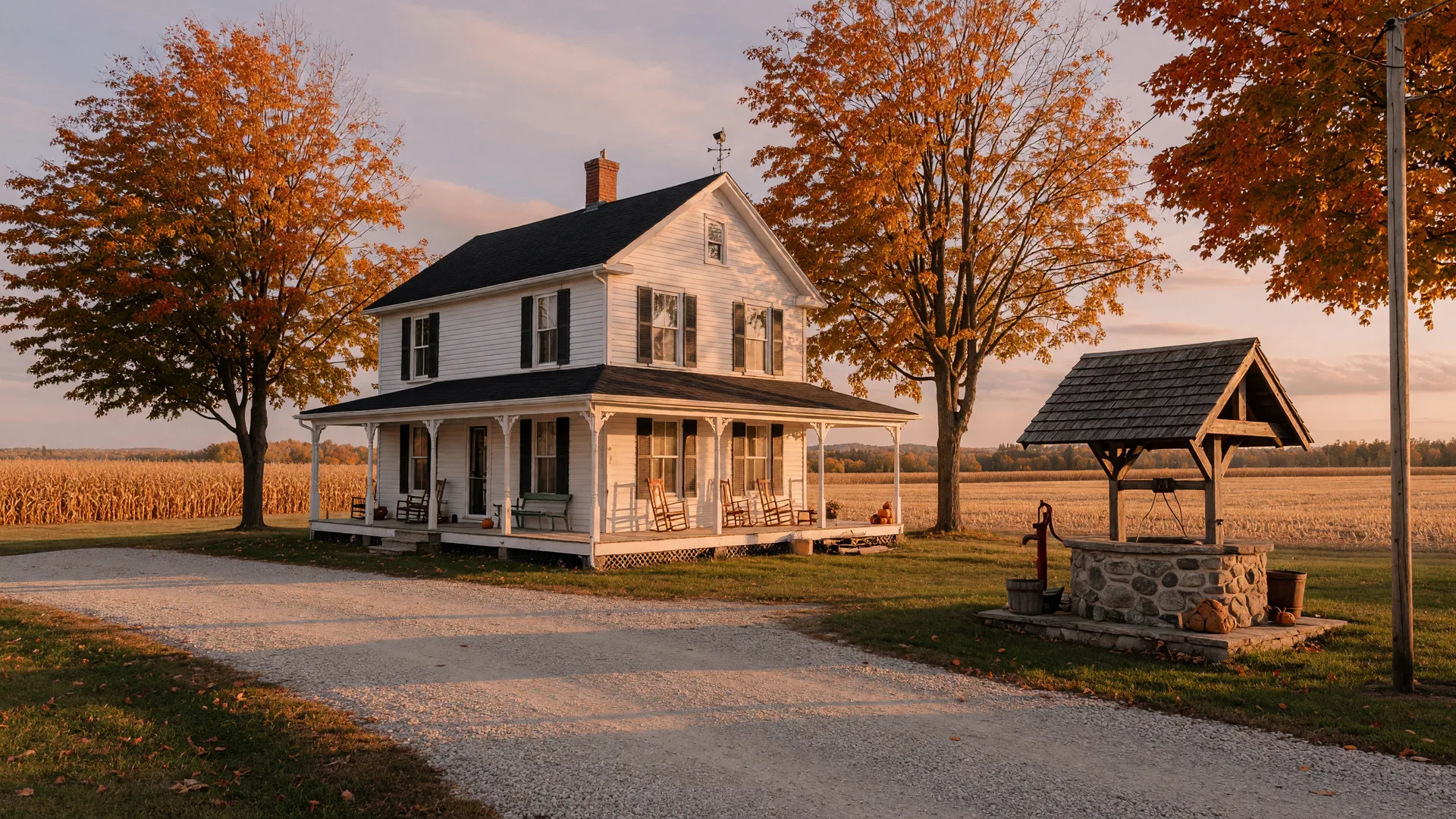
The moment you move from a serviced subdivision to a country property in East Gwillimbury, you become your own utility company. There is no city water line and no municipal sewer behind the tap and the toilet, there is a private well and a private septic system, and they are yours to maintain. The good news is that both can be checked before you commit, and in Ontario the way you do that is through offer conditions, not through automatic law. This article is the checklist I walk buyers through when they are looking at well water and septic on rural acreage in Holland Landing, Sharon, Queensville, Mount Albert and the concession roads beyond.
First, Know Which Pockets Are Actually on Well and Septic
East Gwillimbury is a big municipality, and service varies from street to street. The village cores are largely serviced: Holland Landing is mostly on municipal water and sewers, with pockets along Yonge Street, Sand Road and Park Avenue still on private systems; Sharon's village homes are mostly on town water with many older homes on private septic; Queensville and Mount Albert are served by municipal groundwater systems. It is the rural acreage along the concession roads, the 2 to 20 acre parcels that draw so many buyers here, that almost always runs on a private well and septic. So the first question on any listing is not what the photos show, it is what utilities the property actually has. The East Gwillimbury market page covers the communities, and I can tell you pocket by pocket which homes are serviced and which are on well and septic.
The Well: Test Before You Trust
There is no province-wide legal requirement to test a private well when a home is sold, which is exactly why buyers must test for themselves. Make the offer conditional on a water potability test, and do it properly. The free public test through your local public health unit covers the two bacterial indicators that matter most, E. coli and total coliforms, and any E. coli result means the water is unsafe. Because a single sample only captures one moment, the reliable way is three samples taken one to three weeks apart, which confirms the supply is stable, not just lucky on test day.
The free test does not cover chemicals, minerals or other contaminants, so if you want the full picture, plan to pay a private accredited lab for a broader test. Ask for the well record too, Ontario keeps well records on file, and it tells you the depth, the construction and the history of the well. And ask about yield: a flow test confirms the well produces enough water for a household, because a slow well changes life on the property in ways a city buyer never thinks about. Private wells in Ontario are regulated under the Wells Regulation, and the seller is required to disclose known defects, but the testing is yours to do. That is why the condition exists.
The Septic: Have It Inspected by a Qualified Professional
Septic systems in Ontario are governed by Part 8 of the Ontario Building Code, and the type you will find on most rural homes is a Class 4 system: a septic tank and a leaching bed. There is no province-wide law forcing a septic inspection when a home is sold, but there is a catch specific to East Gwillimbury: the town runs a mandatory septic maintenance inspection program for properties in designated areas, including near the Lake Simcoe shoreline, watercourses in the watershed, and York Region drinking water wells. So on some acreage, the condition of the septic is not optional, it is regulated.
For every country purchase, make the offer conditional on a septic inspection by a licensed or qualified septic professional, not just a general home inspector. A proper inspection locates the system, pumps the tank, measures the sludge and scum levels, and assesses the leaching bed against the building code requirements. That is the difference between knowing the system is sound and discovering a failed leaching bed after closing, which is one of the most expensive surprises in country living. My guide to the home inspection covers what the general inspector handles, and the septic gets its own specialist because it is a system of its own.
Make It a Condition, Not a Hope
The clean way to handle all of this is with two well-drafted offer conditions: one for the water supply, covering the potability test, the well record and the flow test, and one for the septic system, covering the inspection by a qualified professional. If the results come back clean, you waive the conditions and close with confidence. If they do not, you negotiate the repair or replacement, or you walk away before you own the problem. That is the entire point of due diligence, and it is why buying rural property is a job for an experienced buyer's agent who has done it before. My full guide to buying a rural property in East Gwillimbury lays out the rest of the checklist: zoning, financing, insurance, and what else changes when the address is a concession road.
The Truth About Country Living, Handled Properly
None of this should scare you off the acreage, because the trade is real: space, privacy, trees and the quiet that a subdivision cannot offer, at prices that make the lifestyle accessible. The buyers who do country living well treat the well, the septic and the zoning as the price of admission. They test, they inspect, they negotiate the fix, and they close on a property they can live on for twenty years instead of a mystery they inherit. The ones who skip the checks usually end up paying for it later.
I have sold homes in these communities since 2007, including plenty of acreage, and I know which pockets are serviced, which run on well and septic, and what a fair rural deal looks like in this town. On the selling side, my guide to selling a country property covers what makes a rural listing different. If you are ready to look at acreage in East Gwillimbury, let us start the conversation with the right conditions built in from the first offer.
Thanks, Lee :)