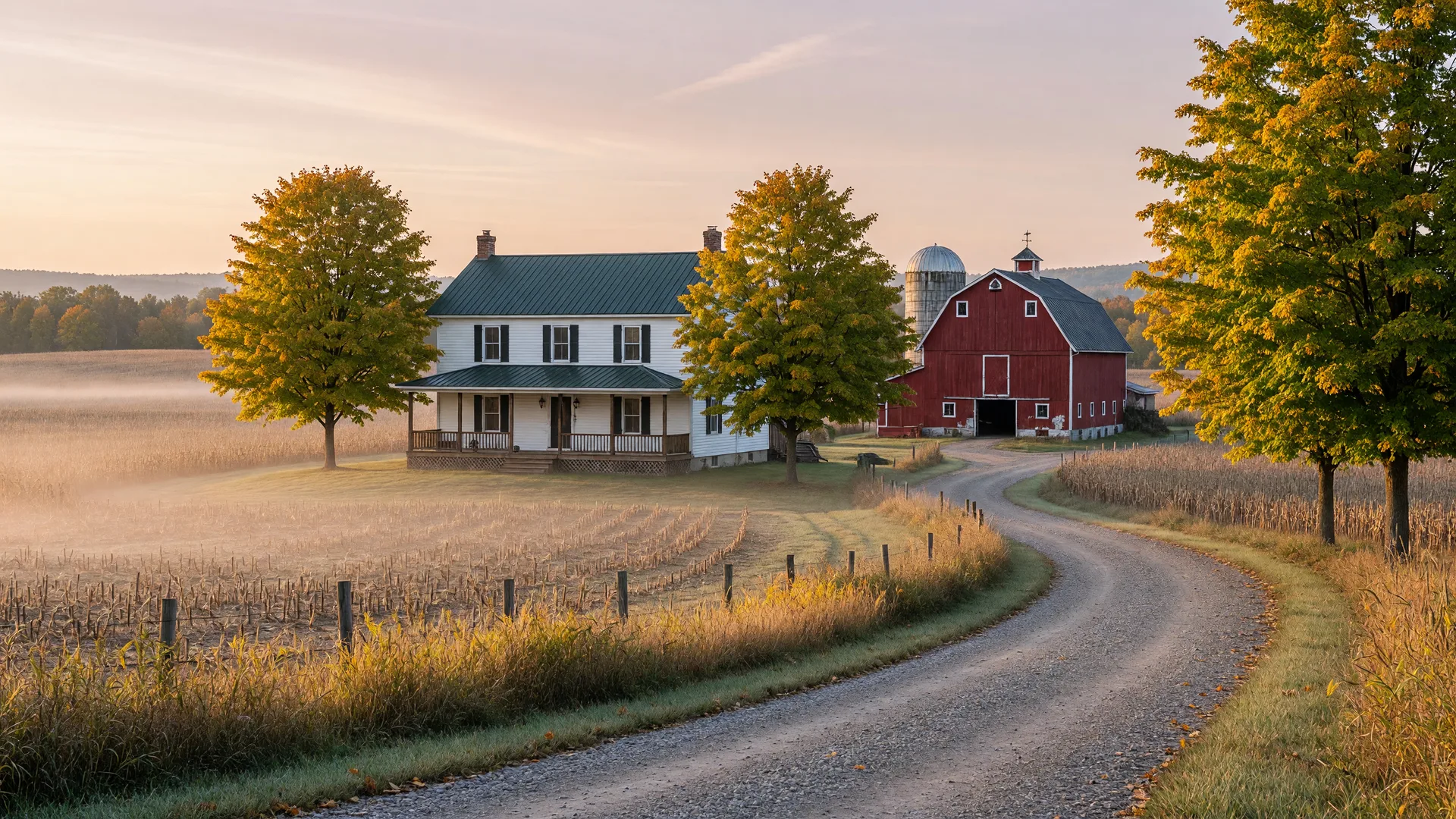
Most of East Gwillimbury is countryside: the villages of Holland Landing, Sharon, Queensville and Mount Albert sit inside a town that is still largely farm fields, woodlots, and acreage. If your property is one of those rural listings, the playbook that works for a detached home on a subdivision street will only take you so far. Country properties attract different buyers, who come from farther away, ask harder questions, and make decisions on different timelines. Here is what is genuinely different about selling rural property in East Gwillimbury, and how to get it right.
Who Buys Country Properties
Your buyer is probably not your neighbour. Rural buyers in this market come from all over: families moving out of Toronto and the inner suburbs who want space, people buying a small hobby farm, downsizers from other towns looking for a different kind of home on one or two acres, and sometimes buyers relocating to York Region for work who fell in love with the idea of country living. What they share is that they found you online, and the search range is far wider than a one-town radius. That changes the marketing: this home needs to reach a regional audience, and the listing has to answer questions a buyer who has never driven your road will have.
The practical side of that is that rural buyers rarely decide in a weekend. They come for a first visit, go home, think, sometimes come back again. A country property that takes longer to sell than a comparable town home is normal, not a failure, and pricing and marketing need to be set with that reality in mind so you do not panic and underprice on day 30.
The Paperwork Buyers Will Ask For
On a country property, the house is half the story. The other half is the systems that keep it running, and a serious buyer will ask about all of them before they write an offer. The well: its records, the last water test results, the pump age and capacity. The septic system: its age, the last inspection or pump-out date, and its location on the property. Zoning and how the land can actually be used, which for acreage can be more specific than a homeowner expects. Any permits or recent work on the house, barn, or outbuildings. Conservation authority or other restrictions on the property. Road access and who maintains the lane or driveway, especially in winter.
I tell rural sellers to gather this paperwork before the listing goes live, not after an offer arrives. Hunting for a well record while a buyer waits is how good deals get cold. Presenting the file up front signals that this property is looked after, and it shortens the due diligence period once an offer is signed. The same questions, from the buyer's side, are the heart of my guide to buying a rural property, and seeing both sides makes it clear why the file matters.
Pricing Acreage With Few Comparables
A subdivision home has forty comparable sales within a kilometre. A country property might have two or three sales in the whole township in the last year, none of them exactly like yours. That means pricing is built from what actually sold, adjusted for location, acreage, the condition of the house, the outbuildings, road frontage and how the land lies. There is no reliable per-acre formula, because the house makes up most of the value and its condition varies wildly. This is precisely where an agent who knows the local rural market earns their keep, and where a generic online estimate is nearly useless on acreage. The East Gwillimbury market page gives context on how the town's market is moving, but a specific rural price needs a specific rural comparison.
Presentation That Travels Online
Because most of your buyers start online and hundreds of kilometres away, the listing has to show the whole property, not just the house. Professional photography matters, and so does the wider view: the fields, the tree line, the barn, the view off the back deck, the way the property sits on the road. Aerial photography is worth real money on acreage because it shows boundary context that ground-level shots cannot. A floor plan helps buyers who cannot easily picture the layout from photos alone. And the little things count double on a country property: a mown path, a cleaned-out barn, a driveway in decent shape. Buyers read all of it as a sign of how the land and the systems have been cared for.
It is also worth saying plainly: disclose what you know. If you know the septic needs attention or the well has a history, tell your agent and get it in the listing conversation. Problems that surface late are what sink rural deals, and a buyer who feels misled about a well on acreage will not simply close anyway.
Timing and Patience, Honestly
The right buyer for your country property exists. That buyer just may not walk in the first week. Rural properties sell on a longer rhythm, and the goal is not the fastest sale, it is the right sale at the right price, closed cleanly. If you are selling a rural property anywhere from Holland Landing to Mount Albert, the strategy has to respect that: honest up-front pricing from day one, a complete file ready to show, and marketing built for this audience. If you are thinking about listing acreage, or a home with a big lot in one of the villages, I would love to talk through what your property needs before it goes live. My selling process page shows how I prepare a listing, and the FAQ covers the common questions about selling in this market.
Thanks, Lee :)