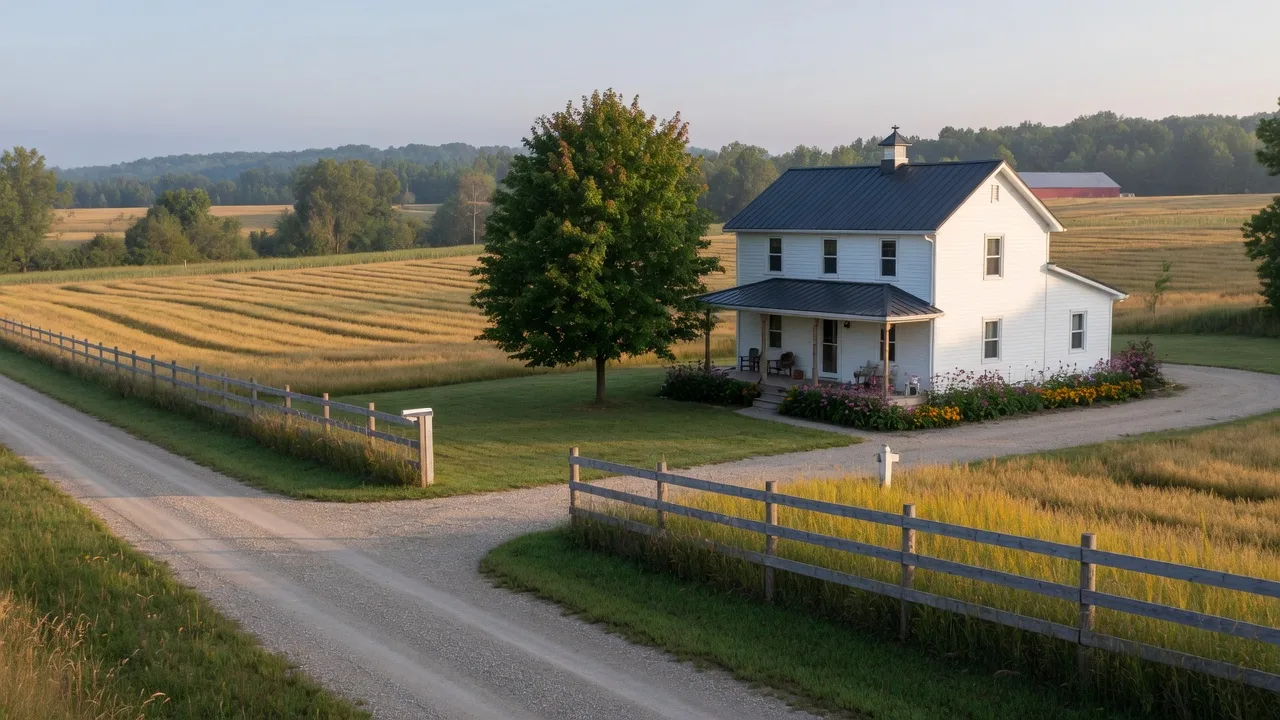
A rural property in East Gwillimbury is a genuinely different purchase from a house in town. The countryside makes up most of the town's 238 square kilometres, and a country home usually comes with a private well and a private septic system instead of municipal water and sewer. That difference is the whole story: the systems, the zoning and the checks that go with them. Here is the checklist I walk buyers through when we are looking at acreage, starting with the two things that trip the most people up, the well and the septic.
Where the Country Properties Actually Are
East Gwillimbury's built-up communities, the villages of Holland Landing, Queensville, Sharon and Mount Albert, sit inside a much larger countryside like islands. The land around and between them is where the rural properties live: hobby farms, acreages with a house and a barn or shop, estate properties on big lots, and the occasional working farm. That mix is one of the reasons people buy here. You can be on acreage and still be a short drive from a grocery store or the GO station.
Large parts of that countryside are inside the Greenbelt Protected Countryside and the Oak Ridges Moraine, both provincially protected from urbanization. For a buyer that cuts two ways. It is wonderful for peace and quiet, because what is there now is planned to stay rural. And it means you cannot assume you can build, add on, sever a lot or change the use the way you could in town. Mount Albert sits outside the town's central growth area, so the countryside around that village is expected to stay rural in the official plan for a long time.
The other defining feature is servicing. Rural homes in East Gwillimbury generally have no municipal water or wastewater connection. They run on a private well and a private on-site septic system, and that is the core of what you need to verify before you buy.
The Well: What You're Really Buying
Start with the well record. Ontario keeps a record for the well on the property, and you can look it up through the province's well records map or by calling the Ministry's well information line. That record tells you when the well was drilled, how deep it is, what it was drilled into and its original flow, which is a useful baseline for what the property can actually supply.
Then get two tests done, a flow test and a water quality test. The flow test measures quantity, how much water the well can produce and sustain. As a general rule of thumb, lenders and CMHC look for a well that can sustain roughly 18 litres a minute for a full hour. Flow can change with the season, so a well that seems fine in a wet spring can behave differently in a dry late summer, and that is worth knowing before you commit.
The water quality test checks what is actually coming out of the tap. York Region Public Health offers free private well water testing to well owners, with samples tested at the Public Health Ontario laboratory for bacteria including coliforms and E. coli. Beyond the free test, it is worth checking for nitrates and anything else specific to the area. Potable, reliable water is the single most important thing a rural property gives you, and it deserves the full check.
The Septic System Nobody Sees
The septic system is regulated under Part 8 of the Ontario Building Code, and it is the piece of a rural home that costs real money when it fails. The first step is to pull the records. The Town of East Gwillimbury's Building Branch offers a septic plan search, which you can request at the Civic Centre on Leslie Street in Sharon. It costs about $50 and takes roughly 10 business days, so order it early, not the week of your offer. The search gives you the as-built drawings and any permit history, and you can pair it with the owner's pumping records.
Beyond the paperwork, have a qualified company inspect the system in person. They will look at the tank, its material and condition, the sludge and scum levels, the risers and access, the leaching bed and how the whole thing is performing. That inspection tells you whether you are buying a system with years left or one you are going to replace soon.
Replacement is not cheap. A full septic replacement on a rural Ontario home is commonly quoted in the $15,000 to $40,000 range, and difficult sites or advanced systems run higher. If the inspection finds a failing system, that is a real negotiation point, and it is better to know it before your offer than to discover it after.
Zoning and What the Land Will Let You Do
In town, the rules are fairly uniform. On a rural lot, zoning is the whole game. East Gwillimbury's zoning by-law treats rural and agricultural land differently, with its own minimum lot sizes, setbacks and permitted uses. Whether you want horses, a workshop, a second dwelling for family or the option to sever a piece of the land, that is not something to assume. It is something to confirm with the Town before you fall in love with a property.
The Greenbelt and Oak Ridges Moraine add another layer. In Oak Ridges Moraine countryside zones, minimum lot sizes are larger than a subdivision lot, and there are limits on accessory buildings and severances. None of this should scare you off. It is just why the land stays rural, and why you want an agent and a lawyer who can read these rules before you commit.
The Inspection, the Offer and the Financing
There is no province-wide rule that forces a well or septic inspection on every rural home sale, which is exactly why you should protect yourself. Make a satisfactory well and septic inspection a condition of your offer, and give yourself time to order the records first. Your lawyer can also help you include a clause holding the seller accountable for any known issues with the systems.
Plan the financing as part of the same conversation. Lenders, including CMHC-insured mortgages, increasingly want to see a functioning, compliant well and septic system and a satisfactory water test before they approve a rural mortgage. A failing system usually becomes a condition that has to be fixed before closing, so it is worth treating the inspection as part of your financing plan rather than an afterthought.
Finally, the everyday things nobody puts on the listing. Test your cell and internet signal at the property, not on the street. Ask how the home is heated, and if there is a wood stove, note that many insurers want a WETT inspection for wood-burning appliances before they write a policy. Know the driveway and whether you will need snow removal on a long lane in winter, and budget for maintenance on a house that has its own systems to care for. None of this is a reason not to buy rural. It is a reason to buy informed.
My Take on Rural Buying Here
I have sold homes in these communities since 2007, and I've sold more homes in East Gwillimbury than any other Realtor over the past 10 years. That career has included more than 700 families across the areas I serve, and a good number of them bought rural. The buyers who do it well treat the well, the septic and the zoning as the price of admission, and they end up with acreage and peace of mind. The ones who skip the checks usually end up paying for it later.
If you are thinking about country property, I would start with my East Gwillimbury page to get a feel for the town, then look at the countryside around Queensville and Mount Albert in particular, since those edges have the most rural character. On the buying side, my buying guide walks through the whole process, and when the time comes to sell a country property, I do that side of it too. If you have a rural property in mind, I'm happy to look at it with you and flag the well, the septic and the zoning before you ever write an offer.
Thanks, Lee