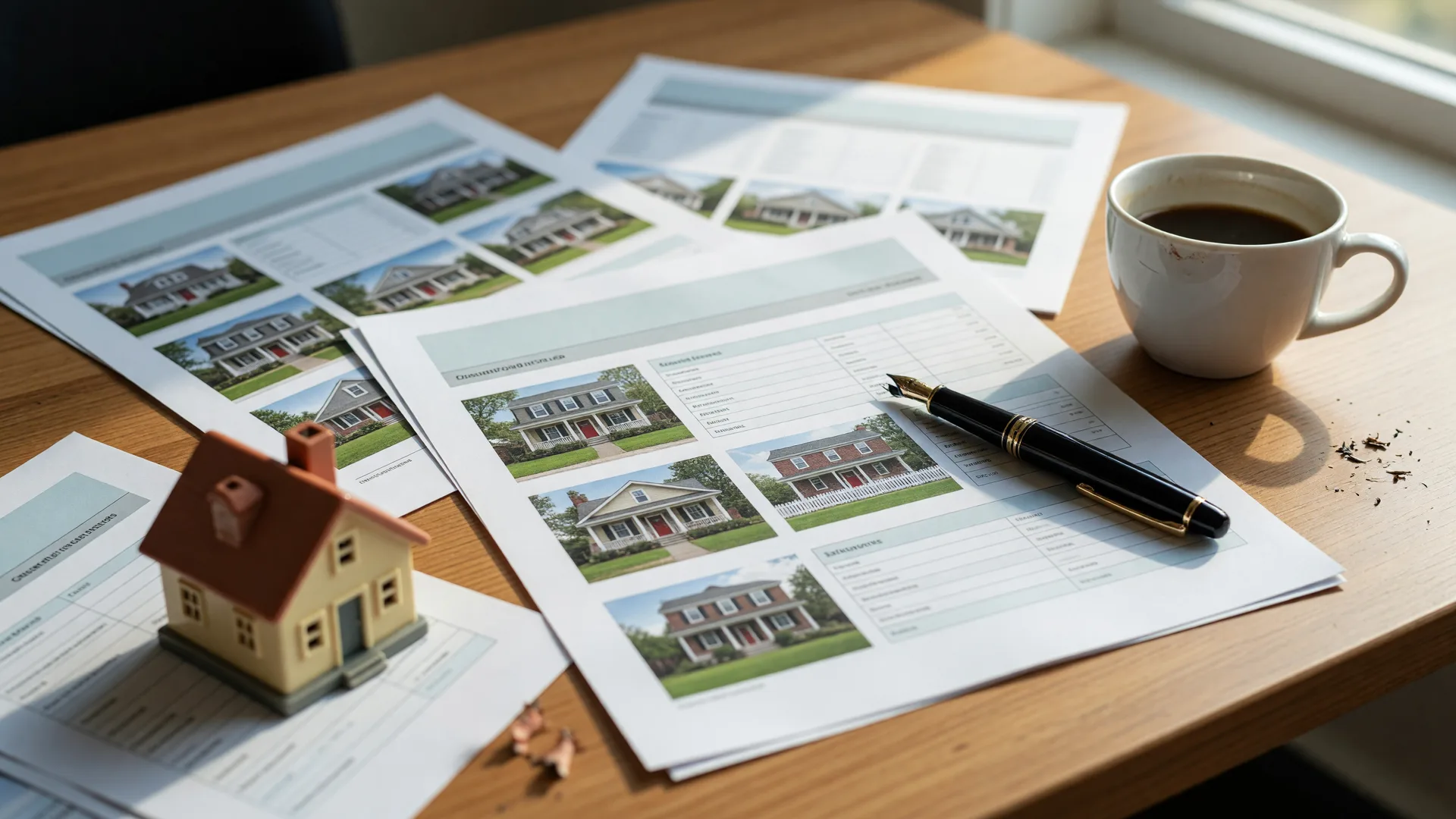
One of the most common questions I get at the very first meeting is some version of this: I interviewed three Realtors and got three different prices, one says 1.4, one says 1.5, one says 1.6, and I do not know who to believe. It is a fair question, and the honest answer is that the three numbers are not equally real. This article explains why listing prices disagree, how to read the comparables yourself so you can judge the reasoning, and how to spot the number that is really there to buy the listing rather than sell your home.
Why the Prices Can Differ So Much
Two competent agents can look at the same house and come to different numbers, and not all of the difference is a mistake. There are three honest sources of disagreement, and then there is a fourth one that is not so honest.
The comparables they chose. The price is built from the homes an agent selects as comparable, and the selection is a judgment call. One agent may lean on three similar recent sales in your exact pocket. Another may reach wider and pull in homes from a neighbouring area or a slightly different size range to support a different conclusion. Two different baskets of comparables produce two different numbers, and both agents can point at their data with a straight face.
The adjustments they made. No two homes are identical, so an agent adjusts for the differences: an extra bathroom, a finished basement, a wider lot, a renovation done properly versus a patch job. Those adjustments carry ranges, and where an agent lands inside the range changes the final number. A small difference in how a basement is valued can swing a price by tens of thousands of dollars.
How they read market conditions. The comparable sales tell you what similar homes have been worth. Market conditions tell you how much room there is inside that evidence right now: how much inventory is on the market, how many similar homes are competing, and how fast the average listing sells. Two agents reading the same conditions can weigh them differently, and that shifts the price.
The fourth reason: the price is buying the listing. This is the uncomfortable one. A listing agreement is how agents earn a living, and the easiest way to win a listing is to tell the seller the number they want to hear. A high price is flattering, it feels like a win, and it is often the exact reason an agent gets hired. The problem is that an overpriced home does not sell for the high number, it sits, and then it sells for less than a properly priced home would have. Why an overpriced launch costs you more than a price cut explains the mechanics in detail. A price that is too high at launch does not protect you, it quietly lowers your final sale.
How to Read the Comparables Yourself
You do not need to be a Realtor to judge whether a price is built from evidence. Ask each agent to walk you through their comparables, and check four things.
Are the sales truly comparable? The best comparables are homes that actually sold, not homes still listed, in the same pocket of the town, similar style, similar size, and recent, ideally within the last 90 days. A listing price is an opinion, a sold price is a fact, and a comparable that is a different style, a different neighbourhood, or six months old supports a weaker case. In East Gwillimbury, the pocket matters enormously: a home in Sharon or Queensville can sit in a different market from one in Mount Albert or Holland Landing even when the square footage is close.
What adjustments did they make, and can they defend them? If an agent cannot show you how they travelled from the comparable sales to their number, you are holding a guess with a good presentation behind it. The adjustments should be explainable in plain language.
Sold price or asking price? Beware of a pricing conversation built on what other sellers are asking. Other people's asking prices are opinions, sometimes hopeful ones. The evidence is what homes have actually sold for.
What happened to overpriced homes nearby? Look at what the homes that sat did, the ones that listed high, dropped, and sold. Their final price is the best lesson your market has to teach, and it is usually humbling.
What the Highest Number Usually Gets You
Here is what almost always happens with the highest of the three numbers. The home launches, the first two to three weeks bring quiet showings and no offers, the market reads the price as wrong, and the home starts to look stale. Then comes a price drop, which buyers read as a signal, and the home finally sells below where an evidence-based launch price would have landed it. The flattering number did not protect a single dollar of equity, it cost some. I go through this exact sequence in my article on the three signs a home is overpriced, and it is the single most expensive mistake I see sellers make.
The honest way to pick between three agents is not to take the highest number. It is to take the agent whose reasoning you can follow, whose comparables you can verify, and who will tell you the truth about what the market will actually pay, even when it is not the number you hoped for.
How I Do It Differently
I do not hand you a number and hope. I walk through the comparable sales, the adjustments, and the market conditions with you, and I show you how the number was built. My full pricing method is spelled out here in my article on how I price a home, and the questions you should ask before signing anything are covered in my listing interview checklist. The price we agree on should be one you understand and can defend, because you are the one who has to live with it, and because a number you believe in is the one we can actually achieve.
I have sold more homes in East Gwillimbury than any other Realtor over the past 10 years, and the homes that sell well here are the ones priced from evidence and launched properly. The listing price is where the whole sale is won or lost, and it deserves more than a number you like.
What To Do Next
Go back to each agent and ask for the comparables, not just the number. Ask which sales they used, why those, and what adjustments they made. Compare the reasoning, not the digits. If an agent cannot show their work, that is your answer. If the highest number comes with the thinnest reasoning, that is your warning. My selling guide explains the whole process from pricing to closing, and if you would like a second opinion on your home that you can follow line by line, that is exactly what I offer, no pressure attached.
Thanks, Lee :)